Hesser: To help students with dyslexia, we all need to know more
This article has been written by

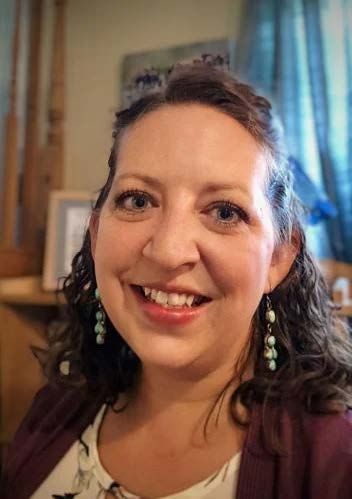
Megan Hesser is the director of WYO Right to Read and owner of Hesser Literacy Partners, LLC.
Dyslexia is a journey, and not just for the person who has it. When it's your child, the journey includes the whole family: mom, dad, and siblings.
When my son first fell in love with hockey at age 3 and always said Zamboni as bizoni, it was so cute. I didn't know.
I couldn't figure out when he was in kindergarten why he struggled to sound out the word "and," all letter sounds he learned very early in the school year. The next page, he read it like a champ, with no hesitation. But the page after that, we were back to struggling to sound it out. I didn't know.
When his talking became suddenly disruptive in the classroom the week they introduced sentence writing, he was sent to a different teacher's class because he didn't know anyone and wouldn't talk. I didn't know.
The struggle to teach him to tie his shoes was immense, so we hit pause until he was a little older then, a little older. I didn't know. The next year, he went to the nurse nearly every day with an upset stomach at math time, which followed writing. I didn't know. (Literally that one I didn't know because the school didn't tell me until the end of the year.)
All the things I didn't know pointed to a problem, but his classroom teachers didn't know, either. When it was starting to be recognized that he was struggling in first grade, the only advice given by his teacher was to make him read more at home. They didn't know, I didn't know, but I soon found out that was not the answer. In the middle of first grade, a friend said the word dyslexia — it wasn't on my radar. I didn't know. It wasn't just a light bulb moment; it was a military-grade search light aimed right at my family.
This was the start of my knowing, because it didn't take very long with my friend Google to be 99% sure this was the problem. By this time, I was worried, my husband was worried, and little sister was feeling it as she watched us have to devote more time to her brother to figure out what to do next and how to help him.
The school tried their best, but they didn't know, and they didn't spend any time with Google, falling down a rabbit hole. I did. The rabbit hole led to a mom with a degree in fine art getting a master's in education. I can tell you, even though I know, the rabbit hole hasn't ended (or maybe it has, and I'm just stuck in an alternate Wonderland filled with IEP meetings, fighting the schools for appropriate services, tears, anxiety, school trauma and now homeschool). Ironically, some of those IEP meetings could have been mistaken for the Hatter's tea party in Wonderland, the nonsense said was sometimes wild. They didn't know.
Megan Hesser is the director of WYO Right to Read and owner of Hesser Literacy Partners, LLC.
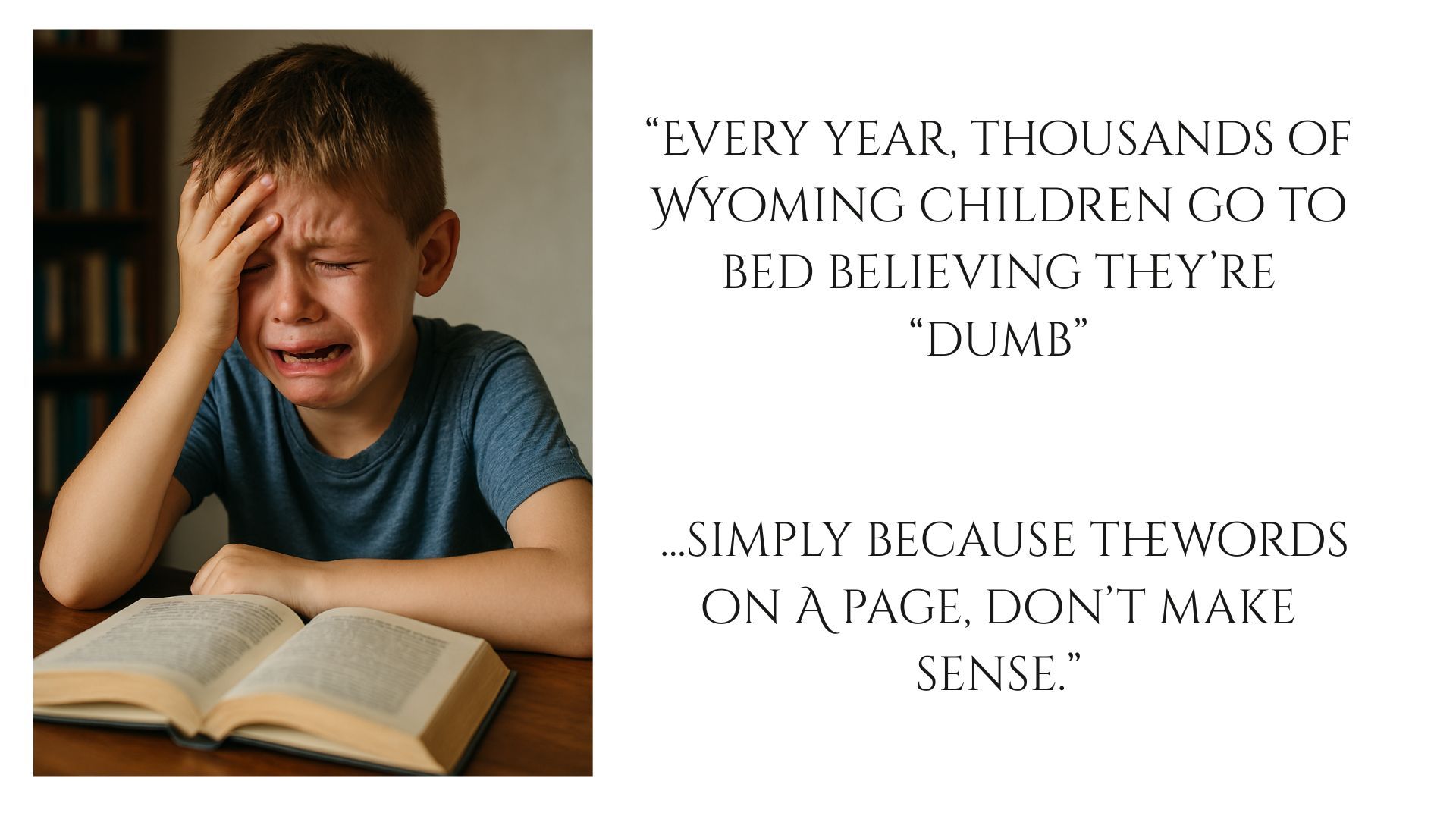
Despite dyslexia being the most common learning disability a teacher will see in their classroom, most don't know because teacher's prep has largely avoided teaching them about it, and most of the professional development they get on the job avoids it or uses questionable sources. They don't know.
Enough is enough. We must support our teachers better because they need to know and they need to be able to help their students. They need to know that telling parents of struggling readers to make them read more at home, or that one day they will mature and it will just click, are fallacies.
Human brains must be taught explicitly how to read; we are not hard wired for that skill. In fact, we must rewire and use parts of our brain intended for other things to be able to learn to read. For some, that is a biologically greater struggle than for others. Reading happens on a continuum of "excellent" to "unable," with every shade of skill level in between.
The other irony parents in the dyslexia world face is that what can teach our children to read works for all students, but it is the only way for our kids, and they rarely get it in public school; it's why only 36% of fourth graders are reading at grade level in Wyoming (NAEP, 2024). There are districts prioritizing teaching their teachers what they need to know, providing the tools, and supports necessary to reach all their students. Locally, it's been a slow, uphill battle, largely because our administrators came from those same teacher's prep programs. They don't know what they don't know, so they aren't always making the best selections to drive the change needed for our kids.
What our kids need now is for parents, teachers and administrators to come together with the Wyoming Department of Education and ask our legislators to do the right thing for Wyoming students and teachers. It's time to pass a comprehensive language and literacy act that can fill the cracks in public education that are swallowing our kids whole and propel ALL our students to a better future. It's time to stop saying. "I didn't know."
Megan Hesser is the director of WYO Right to Read and owner of Hesser Literacy Partners, LLC.
11/7/25, 9:55 AM Hesser: To help students with dyslexia, we all need to know more | Guest Column | wyomingnews.com