
Dyslexia IEP 101
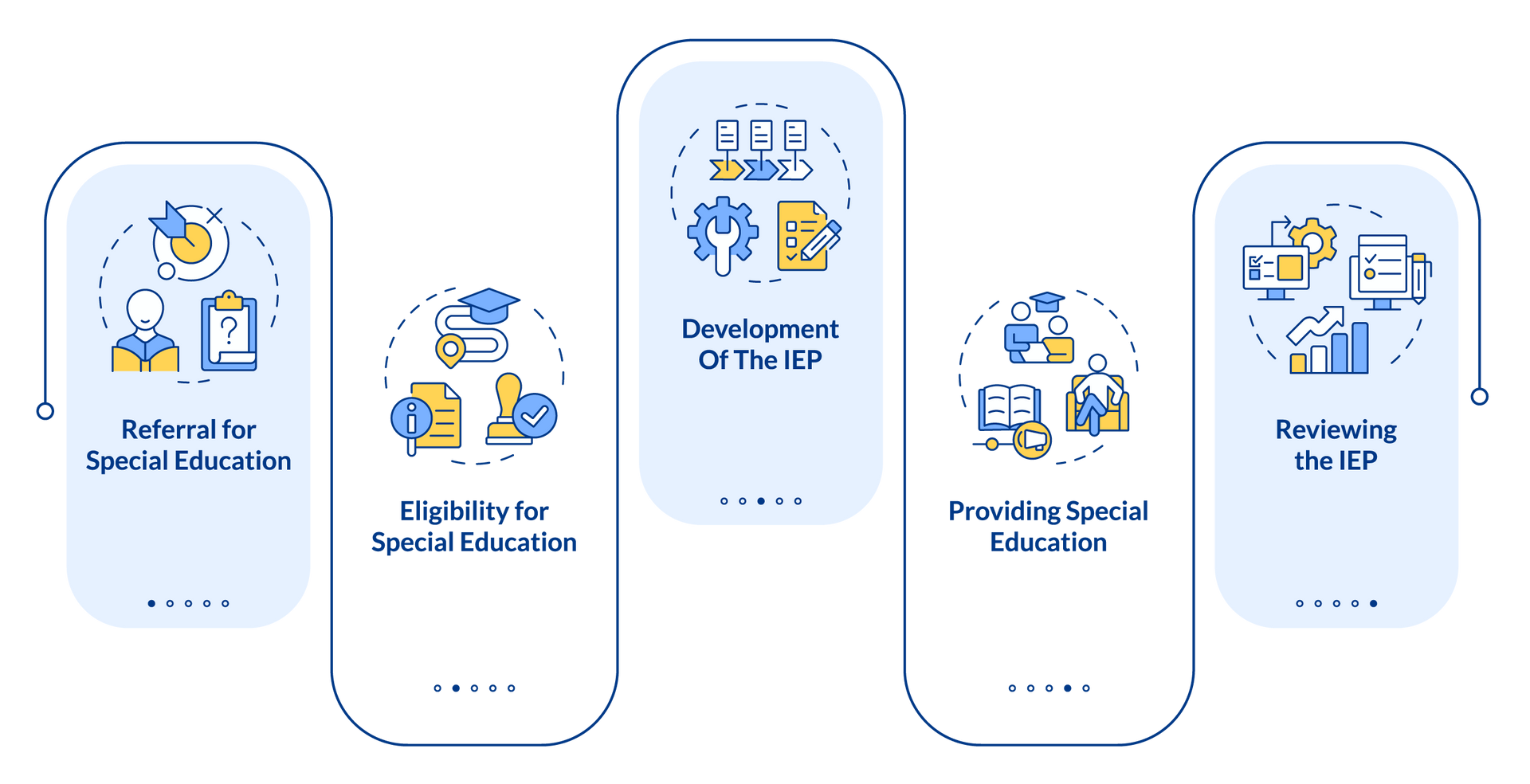
IRP vs. IEP
| Feature | IRP (Individualized Reading Plan) | IEP (Individualized Education Program) |
|---|---|---|
| Legal Status | Not legally binding; school can change or end it without parent consent. | Legally binding under IDEA (20 U.S.C. § 1400 et seq.; 34 C.F.R. Part 300); enforceable through due process and parental rights. |
| Who It Serves | General education students who are behind in reading. | Students with disabilities (e.g., dyslexia, dysgraphia, dyscalculia, SLD, ADHD, autism, etc.). |
| Scope | Reading only; typically focused on short-term interventions. | Comprehensive; includes all areas of need (reading, writing, math, behavior, speech, etc.). |
| Services Provided | General ed interventions (small groups, computer programs, extra reading time). | Specialized instruction, related services, accommodations, and modifications. |
| Instruction | May or may not be evidence-based or delivered by trained specialists. | Must be evidence-based, delivered with fidelity by qualified staff (34 C.F.R. § 300.39; § 300.320). |
| Parent Rights | Parents have little to no input or enforcement power. | Parents have full rights: consent, meetings, due process, “stay put” protections (34 C.F.R. § 300.503, § 300.518). |
| Accountability | Progress monitored, but no guarantee of results or compliance. | Must provide FAPE (Free Appropriate Public Education); progress must be meaningful (Endrew F. v. Douglas County, 580 U.S. 386 (2017)). |
| Timeline | Can start quickly; flexible, short-term. | Requires evaluation, eligibility determination, and formal annual reviews (34 C.F.R. § 300.301–300.306). |
Why Schools Offer IRPs Instead of IEPs
Cheaper: No obligation to provide specialized programs or certified staff.
Fewer Legal Protections: No due process rights for parents.
Flexibility: Easier for schools to adjust or discontinue.
Delay Tactic: Sometimes used to postpone or avoid an evaluation for special education, despite Child Find obligations (20 U.S.C. § 1412(a)(3); 34 C.F.R. § 300.111).
Parent Takeaway
A comprehensive special education evaluation in all areas of suspected disability (34 C.F.R. § 300.304).
Proper documentation of the diagnosis (SLD/dyslexia) on the IEP.
An IEP that guarantees meaningful educational progress, not just access to generic interventions.
Legal Citations:
IDEA: 20 U.S.C. § 1400 et seq.; 34 C.F.R. Part 300
Child Find: 34 C.F.R. § 300.111
Evaluations: 34 C.F.R. §§ 300.304–300.306
Prior Written Notice: 34 C.F.R. § 300.503
FAPE: 20 U.S.C. § 1412(a)(1); 34 C.F.R. § 300.17
Endrew F. v. Douglas County, 580 U.S. 386 (2017)


Learn More About IEP
Legal & Advocacy Resources
- Common False Statements Parents Hear from Districts — and the Laws that Counter Them
- Discrepancy Model Discriminates
- Discrepancy Model Discrimination (Handout)
- Evidence-Based Instruction & Fidelity (Handout)
- Failure to Provide Qualified Dyslexia Instruction — Legal Violations
- What an IEP SHOULD look like
- Parent Right to Request an IEP Meeting
- Predetermination — Example
- Predetermination (Handout)
- Prior Written Notice — Understanding the PWN
- Prior Written Notice (Handout)
- Selecting the Right Evaluator for an Independent Educational Evaluation (IEE)
- Stay-Put Provision
- Why Methodology Matters on an IEP