Children with dyslexia can succeed, if schools offer the instruction they need
This article has been written by

Image: Hannah Habermann - Wyoming Public Media
Most Wyoming parents raising a child with dyslexia could fill an entire book with their stories — the sleepless nights, the tears over homework, the self-doubt shadowing otherwise bright, creative kids. As one of the directors of WYO Right to Read, I want to give voice to those experiences and explain what dyslexia truly is — and what it means for a child who walks into a Wyoming classroom each day unable to read the words on a page.
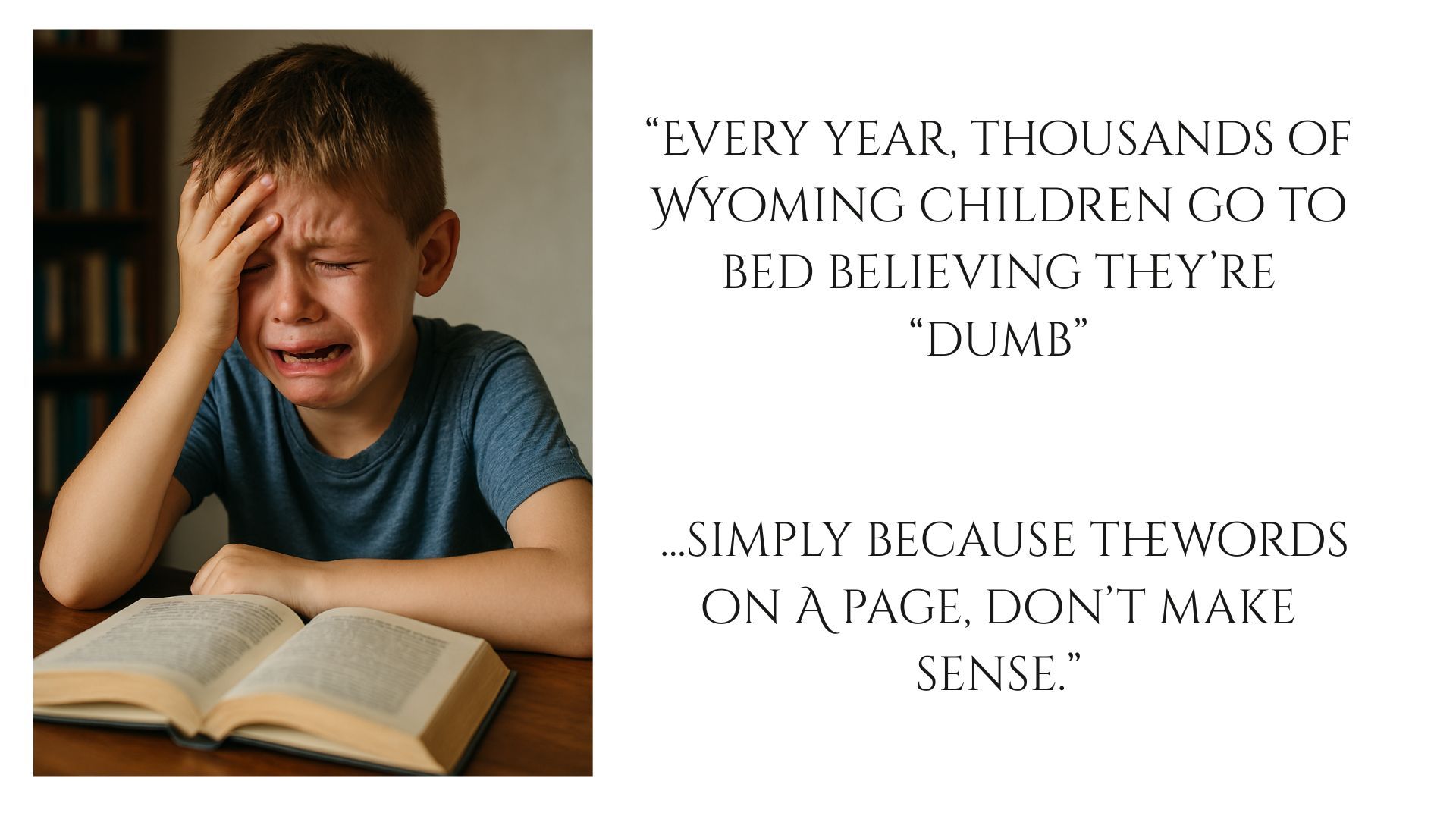
Dyslexia is not a measure of intelligence. It is a language-based learning difference affecting how the brain processes written words. With proper instruction, children with dyslexia can thrive academically and grow into confident, capable adults. Without that support, school becomes a daily battleground — where shame, anxiety and feelings of failure take root.
Our grandson — let's call him JM — was one of these children.
The Early Signs
At first, we didn't realize JM couldn't read. He cleverly memorized books that had been read aloud. But when he entered school, the cracks showed.
In first grade, his teacher placed him in an after-school group for struggling readers. By second and third grade — even amid COVID's chaos — JM consistently tested in the 1%-3% range, flagged "high risk." We requested an evaluation, and JM qualified for an Individualized Education Program (IEP). He was never screened for dyslexia, despite his state testing scores.
Starting in second grade, he received one hour a day of "specialized instruction," delivered by a special education teacher. He continued that one-to-one instruction through third and fourth grade.
But here's the heartbreaking truth: after 3½ years of "special education," JM remained functionally illiterate — unable to read a single paragraph from his fourth grade math book.
Rock bottom
By the end of the first semester of fourth grade, JM dreaded school. He felt humiliated and isolated. Mornings became battles of stomachaches and excuses to stay home. Afternoons ended in meltdowns — pounding his fists, sobbing and saying, "I'm stupid. I can't read. I suck at everything. I want this to be my last day!"
It broke our heart to watch our grandson feel this way.
Out of desperation, we sought an independent neuropsychological evaluation in Colorado. The 20-page report confirmed profound dyslexia and related diagnoses. When we presented it at his October IEP meeting, the first words out of the school psychologist's mouth were: "The State of Wyoming doesn't recognize dyslexia."
That was the moment we realized this would be an uphill battle. The irony? Just weeks earlier, Gov. Mark Gordon had signed a proclamation on dyslexia, recognizing its reality.
The battles
The next two years brought relentless pushback. Not from teachers — they were supportive — but from administrators. Repeatedly, they tried to strip JM's IEP of his Wilson Reading System program, remove references to his certified dyslexia teacher, and even delete his documented diagnoses and accommodations.
We were forced to hire attorneys and advocates, spending tens of thousands of dollars — for what? For one single hour a day of evidence-based reading instruction delivered by a qualified dyslexia teacher.
Even basic accommodations — like calculator use or matching response formats — were treated as unreasonable. Every IEP meeting felt like another fight for JM's dignity and future.
A hard-won victory
Today, JM finally has an appropriate IEP. He is working through the Wilson Reading System, a structured literacy program proven to help dyslexic students. He's on step 10 of 12, and for the first time, he is reading confidently.
This program is intense, and JM has worked hard every single day to get this far. We are so proud of his effort and his refusal to give up, even when the system seemed determined to fail him.
The difference is staggering. He no longer feels "stupid." He is happy, optimistic, athletic — and he loves school again. Yet even now, every IEP meeting leaves us bracing for another battle, another attempt to take away the supports he needs.
Why this matters
JM's story should never have unfolded this way. No family should have to mortgage their future, endure years of legal wrangling and fight tooth-and-nail simply to secure a child's right to read.
And here lies the uncomfortable truth: if JM's progress exposes the district's responsibility to provide the same instruction to all dyslexic students, what happens to the thousands of other Wyoming children silently slipping through the cracks?
The call to action
Every child like JM deserves that "one hour" a day of structured literacy instruction delivered by a highly trained teacher. That is not extravagant — it is the bare minimum required for a free, appropriate public education under federal law.
It should not take years of tears, attorneys and advocacy to get there.
That's why we are calling on Gov. Gordon, Superintendent of Public Instruction Megan Degenfelder and the members of the Wyoming Legislature's Joint Education Committee to act decisively. Wyoming must require evidence-based structured literacy for every child with dyslexia, train teachers to deliver it with fidelity, and hold districts accountable for compliance.
Our children deserve better. Our families deserve better. Wyoming deserves better.
It shouldn't be this hard.

Annie McGlothlin, co-founder of WYO Right to Read, has spent decades advocating for children’s educational rights and for the rights of adults with disabilities to live with choice, dignity and opportunity. A paralegal, mother of an adult son with autism, and grandmother raising a grandson with dyslexia, she was instrumental in passing 2019 legislation to protect children in the court system and organized the 2014 Capitol march for disability funding.